
3 ways the Budget announcements could affect cash savers
Chancellor John Healey has delivered his Autumn 2026 Budget, announcing a raft of changes and proposals for individuals and business owners.
Here, we’ll focus on what his announcements could mean for cash savers, including changes to Lifetime ISAs (LISAs) and a further rise to Income Tax on savings interest. Healey also overturned previously announced plans to reduce limits on Cash ISA subscriptions.
Read on to find out more.
1. Changes to LISAs could help savers keep more of their cash
First-time buyers saving into a LISA can currently contribute up to £4,000 a year and usually receive a 25% government bonus. The bonus is paid monthly and is capped at £1,000 annually.
These funds are then used to purchase a first home up to the value of £450,000 (or they can be used in retirement).
Previously, those buying a property above this value had to pay a penalty of 25%. However, from 29 October 2026, this was reduced to 20%, although other unauthorised withdrawals will still receive the 25% penalty.
This means that if you do need to pay this penalty, you won’t be losing any of your original contributions.
For example:
You save £8,000 into a LISA and receive a £2,000 government bonus.
Withdrawing this to buy a property over £450,000 would previously have incurred a 25% penalty.
This would have been £2,500, meaning you lost your government bonus plus £500 of your own savings.
Under the new rules, the 20% penalty would mean you paid £2,000 in the same circumstances, so you would be able to keep your own money.
First Time Buyer ISA
The chancellor also announced that from April 2029, new savers will be able to contribute to a First Time Buyer ISA, which will replace the LISA.
So far, we know that:
-
- Contribution levels will remain the same at a maximum of £4,000 a year
- The 25% government bonus – capped at £20,000 – will be calculated on the final balance and paid towards an eligible first-home purchase
- There will be no upper age restriction, unlike the LISA, which can only be opened between the ages of 18 and 39
- The existing £450,000 property price ceiling will remain in place.
Final details are still being confirmed, but those with an existing LISA can continue paying into it as normal.
2. Savings interest could attract higher Income Tax from 2027
Income Tax on savings interest was already set to increase by two percentage points. Healey announced an additional increase of two percentage points, effective from April 2027.
Therefore, savers will see an increase of four percentage points on the tax applied to their savings interest.
This table shows you how your Income Tax could change under the new rules:
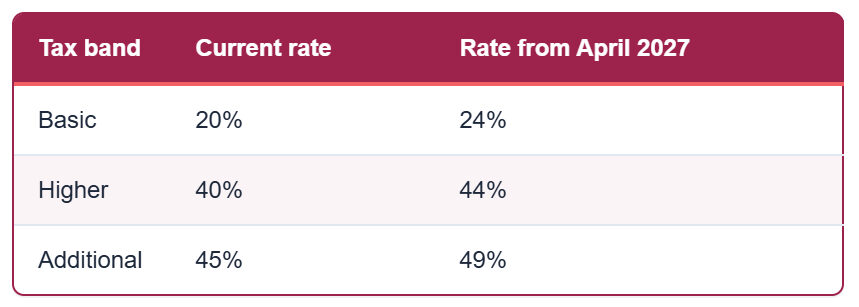
You can still receive savings interest tax-free up to your Personal Savings Allowance (PSA), which is £1,000 for basic-rate taxpayers and £500 for higher-rate taxpayers. Additional-rate taxpayers do not get a PSA.
As an example, if you’re a higher-rate taxpayer with £20,000 in savings earning 4% interest, this would generate £800 in interest.
This is £300 above your PSA, meaning you would pay Income Tax on that £300.
At previous levels of 40%, you would pay £120. However, at the new 44% rate, you would be charged £132.
As a reminder, you don’t pay tax on interest earned in a Cash ISA. If you think your interest is likely to exceed your PSA, then please talk to us about tax-efficient savings options.
3. Cash ISA reversal means contribution limits will remain at their current levels
Healey also overturned one of his predecessor Rachel Reeves’ key proposals, which would have reduced Cash ISA subscription limits for some savers.
While the £20,000 annual ISA contribution limit would remain in place, payments into a Cash ISA were due to be restricted to £12,000 for under-65s.
Cash held in a Stocks and Shares ISA had also been included in Reeves’ plans, with a proposed 22% tax on interest and a ban on transfers from non-Cash ISAs to Cash ISAs, again just for those under 65.
However, Healey overturned these plans, meaning that savers can continue to choose how to distribute their £20,000 across their ISAs.
This means:
-
- You will continue to be able to put your full ISA allowance into a Cash ISA, should you wish
- If you are saving for short-term goals or an emergency fund, you can contribute up to £20,000 into your Cash ISA without attracting Income Tax on interest.
This reversal of proposed policy could prove welcome to savers, given the increase in Income Tax on savings interest we have already outlined.
Healey also mentioned first-time investors, announcing plans to launch a new ISA incentive for them. There is no further detail on this proposal as yet.
Get in touch
The impact of these changes will vary depending on your circumstances, so if you’d like to talk to us about how they could specifically affect you, we’ll be happy to help.
Please email us at info@harperlees.co.uk or call 01277 350560 to find out more.
Please note
This article is for general information only and does not constitute advice. The information is aimed at individuals only.
All information is correct at the time of writing and is subject to change in the future. The value of your investments (and any income from them) can go down as well as up and you may not get back the full amount you invested. Past performance is not a reliable indicator of future performance.
Investments should be considered over the longer term and should fit in with your overall attitude to risk and financial circumstances.
The Financial Conduct Authority does not regulate estate planning, cashflow planning, tax planning, trusts, Lasting Powers of Attorney, or will writing.